Want to be in the loop?
subscribe to
our notification
Business News
NA APPROVES EXTENDED US VISA RIGHTS
BowerGroupAsia Inc.’s managing director Nguyen Viet Ha said one of the many obstacles facing US investors in Vietnam is the government’s single-entry, three-month visa policy for American citizens. “Many investors often come to Vietnam three or four times a year, meaning that they have to conduct visa procedures on each occasion, creating lots of difficulties for them.”
“Vietnam’s increasing of the visa validity for American citizens to one year and with multiple-entry is a very positive move, which can help lead to more US investments and visitors into Vietnam in the time to come,” Ha told VIR. BowerGroupAsia Inc. is a US-backed investment consultancy firm, based in Hanoi.
New visa policy
Vietnam’s National Assembly last week issued a resolution on ratifying a diplomatic note on granting visas between the governments of Vietnam and the US.
Under the note, Vietnam’s government will grant multi-entry, one-year visas to US citizens entering Vietnam for the purposes of attending workshops, travelling, personal affairs, or working with Vietnam’s organisations and businesses.
Similarly, Vietnamese citizens who wish to enter the US will also be granted multiple-entry, 12-month visas for the same purposes.
According to the resolution, the Vietnamese government and relevant agencies must complete all diplomatic procedures and begin granting multiple-entry, 12-month visas to the Americans as soon as possible.
In his document proposing that the National Assembly ratify the diplomatic note, newly elected State President Tran Dai Quang stated that over the past few years, the US side had asked Vietnam on several occasions to raise the visa validity for US citizens from the existing three months (single entry) to one year (multiple entry).
“They say that our visa policy has been causing difficulties for them in terms of obtaining a visa to Vietnam,” Quang said. “Meanwhile, the US has been granting multiple-entry 12-month temporary business/tourism visas to Vietnamese citizens who want to enter the US.”
The thumbs-up
Many National Assembly members have approved of the diplomatic note, saying that it was necessary to raise the American-oriented visas’ validity, as this would also be favourable for Vietnamese citizens entering the US.
“This move will help boost the two countries’ trade and investment co-operation,” said deputy Tran Quoc Khanh representing Hanoi.
“The new visa policy will help reduce the costs and time taken for US citizens entering Vietnam, especially for many Vietnamese people who have US nationality and are returning to Vietnam,” said deputy Hoang Thanh Tung from the southern province of Soc Trang. “The policy would also be suitable within the context of the Vietnam-US comprehensive partnership.”
Many US firms in Vietnam have also applauded Vietnam’s new visa policy, saying the multiple-entry one-year visa would enable US investors to save time and costs when entering Vietnam.
Sesto Vecchi, managing partner of US law firm Russin & Vecchi, told VIR that “Vietnam’s decision to issue multiple-entry, one-year visas to Americans is another solid indication of the growing co-operation between Vietnam and the US.
“Practically, the policy should immediately increase inbound tourism, and especially return visits. It also sends a valuable signal to American businesspeople, demonstrating Vietnam’s willingness to continue to ease policies that are seen as restrictive.”
Ta Dinh Duc, business manager of US company Intel Security in Vietnam, said that “The new visa policy is very good news for US investors, as they will find it more convenient to enter Vietnam”.
This sentiment was echoed by a representative from the US-backed maker of Coke in Ho Chi Minh City, who said that Vietnam’s new visa scheme for US citizens “will create fair treatment for entry between the two countries’ citizens”.
“During my company’s meetings with many other US firms, they suggested that Vietnam apply the same visa programme that the US is applying to Vietnam, otherwise they would not increase their presence in the country,” said the source, who declined to be named.
“The new visa policy is expected to help Vietnam attract more US investors, who currently have to travel into and out of the country many times to complete procedures for their projects here,” he added.
Nguyen Van Tuan, director of a travel company in Hanoi, also expected that the new visa scheme would help his company bring more US tourists into Vietnam.
“The number of US tourists tending to stay in Vietnam for more than three months is increasing. In addition to visiting Vietnam’s tourist spots, they are also seeking business opportunities,” Tuan told VIR.
According to Vietnam’s National Administration of Tourism, last year about 491,300 US tourists visited Vietnam, up 10.7 per cent on-year. The figure touched over 164,700 in this year’s first quarter, up 14.3 per cent on-year. The tourism body stated that the new visa conditions would help Vietnam attract more US tourists.
Proposal
The US community in Vietnam has asked the Vietnamese government several times to increase the validity period of American-oriented visas from the existing three months to one year.
At the Vietnam Business Forum in Hanoi late last year, a policy dialogue between Vietnam’s government and the private business community, Sherry Boger, chairwoman of AmCham in Vietnam, asked Vietnam’s government to extend the business/tourism visas for Americans from the existing three months (single-entry) to one year (multiple-entry).
Under Vietnam’s existing Law on Entry, Exit, Transit, and Residence of Foreigners in Vietnam becoming effective on January 1, 2015, US citizens that plan to visit Vietnam under the equivalent of a US B-1 or B-2 visa will receive visas that have, at most, a three-month period of validity, and a single entry only.
“This development has already resulted in significant impediments to business and pleasure travel between Vietnam and the US, and could reduce the large revenues that tourism generates, not to mention the negative impact on the planned development of tourism as one of the five priority industry clusters in Vietnam,” Boger said.
However, according to Ha of BowerGroupAsia Inc., in addition to loosening visa policy, Vietnam’s government should further improve the local business climate. “US investors are also concerned over a series of obstructions in Vietnam, such as cumbersome investment procedures, weak infrastructure, and unclear policy in luring foreign direct investment,” she stressed.
Source: VIR
Related News
VIETNAM ECONOMY INVESTMENT
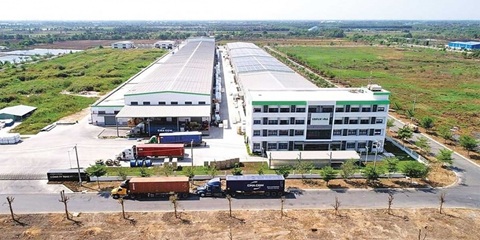
FOREIGN INVESTORS SEEKING A SYNCHRONISED MANUFACTURING ECOSYSTEM
Instead of focusing only on land costs and incentives as usual, foreign investors are seeking a synchronised manufacturing ecosystem, from stable power supply and logistics to shared infrastructure and the convenience of completing residence procedures for experts to serve their long-term investment in the country.
INFRASTRUCTURE / CONSTRUCTION / LOGISTIC / PORT
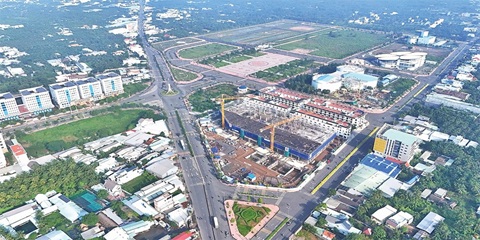
DONG THAP PROVINCE STEPS UP INDUSTRIAL EXPANSION AND INFRASTRUCTURE CONNECTIVITY
Accelerating public investment, strengthening inter-regional connectivity, and expanding industrial land are helping Dong Thap efficiently bolster competitiveness and drive economic growth. Following the 2025 merger of the former Dong Thap and Tien Giang provinces, the expanded Dong Thap province in the Mekong Delta faces mounting pressure to accelerate infrastructure development and strengthen connectivity among local economic zones, urban areas, industrial parks (IPs), and production centres.
PROPERTY / INDUSTRIAL ZONE
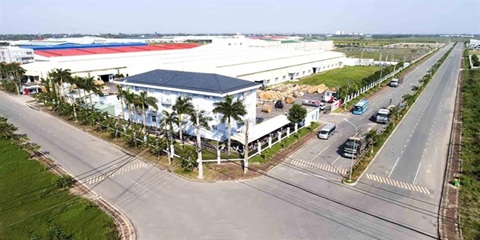
HCM CITY ATTRACTS US$5.7 BILLION INTO EXPORT PROCESSING AND INDUSTRIAL ZONES
HCM City attracted US$5.7 billion in domestic and foreign investment into its export processing and industrial zones during the first nine months of 2026. The figure exceeded the city's full-year target by 31 per cent, highlighting strong momentum in high-quality industrial investment under Resolution No.10-NQ/TW. Total investment reached 131 per cent of the 2026 target of $4.25 billion and represented a 29 per cent increase compared with the same period in 2025, according to the city's Export Processing and Industrial Zones Authority (HEPZA).

BANKING / FINANCE / INSURANCE / TAX
REMITTANCES TO HCM CITY RISE NEARLY 40% IN Q3
Remittances to HCM City reached more than US$2.83 billion in the third quarter of this year, up 39.5 per cent from the previous quarter and 3.6 per cent year-on-year. This was the first quarter showing positive annual growth this year, helping narrow the decline in remittance inflows over the first nine months. According to the State Bank of Vietnam (SBV)’s Regional Branch 2, remittances transferred to HCM City through credit institutions and economic organisations totalled $2.835 billion in Q3, an increase of more than $802 million from the previous quarter.

VIETNAM ECONOMY INVESTMENT
LOCALITIES REPORT BREAKTHROUGH RESULTS IN FDI IN FIRST NINE MONTHS
In Ho Chi Minh City, total registered capital reached $17.2 billion in the first nine months, up 4.2 times from the same period last year. The figure included more than $9.35 billion in newly registered capital and over $4.9 billion in additional capital for existing projects. Foreign investors also registered more than $2.9 billion through capital contributions and share purchases.

TECHNOLOGY
TECH SECTOR GROWTH OPENS UP OPPORTUNITIES FOR VIỆT NAM TO GO GLOBAL
The growth of the electronics, semiconductor and high-tech sectors worldwide is opening up a variety of opportunities for Vietnamese enterprises to integrate more deeply into the global supply chain. However, to become suppliers for these corporations, domestic enterprises must meet rigorous standards regarding quality, technology, productivity and order fulfilment capabilities.
Events Sponsors






















